

Author: Thomas S. Kuhn · Published: 1962 · Genre: Philosophy of Science, History of Science
The Structure of Scientific Revolutions‘s biggest strength is its central insight: science doesn’t grow by steady accumulation, but alternates between long stretches of routine work inside a shared framework and rare upheavals that replace the framework itself. Its biggest weakness is vagueness, above all around its key word, “paradigm,” which Kuhn used in so many senses that readers could find almost anything in it. It’s essential for anyone interested in how science actually works, and worth reading slowly.
The core ideas
- Normal science. Most research is puzzle-solving within a paradigm: an accepted set of theories, methods and model examples that tells scientists which problems matter and what counts as a solution. It’s productive precisely because it doesn’t question its foundations.
- Anomaly and crisis. Results that don’t fit accumulate. At first they’re set aside, but eventually some resist every fix and confidence in the framework breaks down.
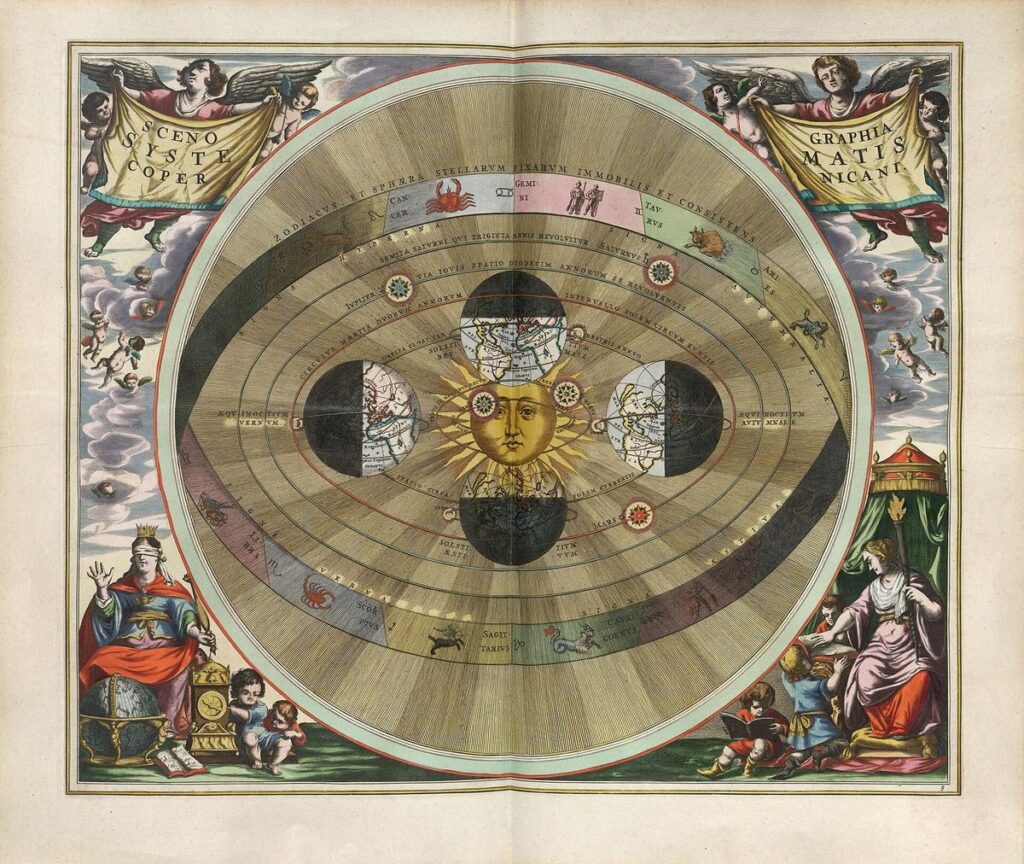
- Revolutions. A new paradigm replaces the old, as when Copernicus displaced Ptolemy, Lavoisier’s oxygen chemistry replaced phlogiston, or Einstein overturned Newton’s absolute space and time. Kuhn likens the change to a gestalt switch, like a drawing that flips from a duck to a rabbit.
- Incommensurability. Scientists on either side of a revolution use key terms differently and judge by different standards, so there’s no neutral way to prove the new paradigm right by the old rules.
- Progress without a destination. Kuhn compares science to Darwinian evolution: it moves away from earlier views and gets better at solving puzzles, but not necessarily toward a final truth. Textbooks hide this by rewriting history so today’s view looks inevitable.
What’s great
- Grounded in history. Kuhn trained as a physicist before becoming a historian, and his arguments come from detailed cases rather than armchair logic.
- It changed the conversation. Before Kuhn, philosophy of science focused largely on the logic of confirmation and falsification. After him, the history and social practice of science had to be taken seriously.
- Short and readable. The main argument is compact, and it’s accessible without training in philosophy.
The controversy
- What is a paradigm? Philosopher Margaret Masterman counted more than twenty distinct senses of the word in the book. In the Postscript to the 1970 second edition, Kuhn split it into a “disciplinary matrix,” a field’s shared commitments, and “exemplars,” the model problem-solutions students learn from.
- Rationality and relativism. Karl Popper and Imre Lakatos objected that Kuhn made theory change look irrational, with Lakatos likening it to mob psychology. Popper also argued that uncritical normal science was a danger, not a virtue. Kuhn denied being a relativist and later named shared values that guide theory choice, including accuracy, consistency, scope, simplicity and fruitfulness, while insisting they don’t settle it mechanically.
- The history itself. Historians have questioned how sharp and sudden revolutions really are; the Copernican shift took well over a century to settle. Kuhn’s cases come almost entirely from physics and chemistry, and critics doubt the model fits other sciences as neatly.
- Who owns Kuhn? Sociologists of the Edinburgh “strong programme” built on his work to argue that social factors explain scientific belief, a reading Kuhn sharply disavowed late in life. Meanwhile “paradigm shift” became business jargon for almost any change.
Who should read it
Read it if you’re a scientist, a student of philosophy or history, or anyone who uses the phrase “paradigm shift.” Get the 50th anniversary edition (2012), which includes the 1970 Postscript and an introduction by philosopher Ian Hacking. Don’t skip the Postscript: it answers many of the objections above.
Rating: 4.5/5
Image credits — Featured image: cover image via Open Library; cover design © the publisher, shown for review purposes. In-article images: Image by Andreas Cellarius via Wikimedia Commons, Public Domain.
