

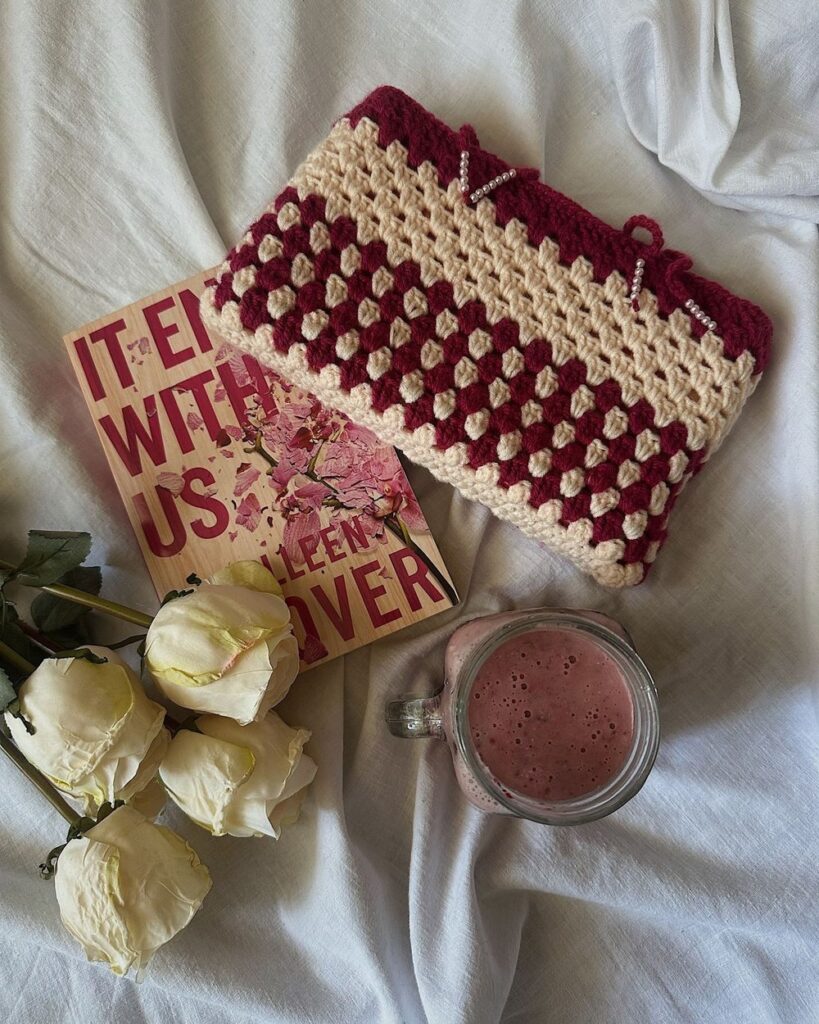
Author: Colleen Hoover · Published: 2016 · Genre: Contemporary Fiction, Romance
It Ends with Us starts like a romance and turns into a novel about domestic violence and why leaving is so hard. It is fast, sincere and genuinely useful in showing how abuse can hide inside an otherwise loving relationship. It’s also written in flat, simple prose, and its romance packaging has made it one of the most argued-about bestsellers of recent years. Worth reading, but not as the swoony love story its marketing often suggests.
What it’s about
Lily Bloom, 23, has just come back from her father’s funeral in Maine, where she stood up to give the eulogy and couldn’t think of a single good thing to say. On a Boston rooftop she meets Ryle Kincaid, a confident neurosurgeon who insists he doesn’t do relationships. Lily opens a flower shop, befriends Ryle’s sister, Allysa, and slowly falls for him.
Interleaved are Lily’s teenage journals, written as letters to Ellen DeGeneres, about Atlas Corrigan, a homeless boy she secretly helped and loved. When Atlas reappears in Boston, Lily’s past and present collide. Behind both stories is her memory of watching her father hurt her mother, and of her mother staying.
What works
- How abuse is shown. The first violent moment is ambiguous enough that Lily, and the reader, want to believe it was an accident. Hoover shows how love, excuses and apologies create doubt, and that is the book’s main insight.
- Why people stay. The novel gives a sympathetic answer to a question often asked with judgment. Lily’s hesitation isn’t weakness; it’s history, hope, fear and practical worry tangled together.
- The author’s note. Hoover explains that the story draws on her parents’ marriage, and that context gives the book real weight.
- The journals. Lily’s teenage entries to Ellen are some of the book’s best writing: funny, specific and sad. They make the Atlas storyline feel lived-in and show, without comment, how her childhood taught her what love looks like.
- Pace. Short chapters and plain prose make it very easy to read, which is a big part of its reach.
The controversy
The book found a second life on BookTok around 2021 and topped bestseller lists for months. With that success came debate. Critics argue that the novel still runs on romance conventions: a wealthy, gorgeous surgeon, a sweeter first love, a love triangle. In their view, that packaging can make an abuser look attractive and shift readers’ attention from safety to chemistry.
Defenders, including many readers who have lived through abuse, say the romantic opening is the point. Abusive relationships rarely look abusive at first, and they credit the book with helping them recognize patterns in their own lives.
Marketing hasn’t helped. In January 2023 Hoover canceled a planned tie-in coloring book after readers objected, and admitted the idea was a mistake. The 2024 film, starring Blake Lively, drew similar complaints about promotion that played down the abuse.
What doesn’t
Beyond the debate, the craft is uneven. The prose is functional at best, the dialogue often reads like texting, and the side characters exist mainly to react to Lily. A backstory meant to explain Ryle’s anger risks sounding like an excuse, even though the book doesn’t frame it that way. Ryle is also written as nearly perfect outside his violence, which serves the argument but flattens him as a character.
Who should read it
Readers who want an accessible story about domestic abuse, and anyone curious about the BookTok phenomenon. If you have experienced abuse, the book may resonate, and it may also be upsetting. Book clubs will find plenty to argue about, especially the questions the author’s note raises about forgiveness and responsibility. Don’t pick it up expecting a light romance.
Rating: 3/5
Photo credits — Featured image: Photo by Book Hut on Pexels.
