

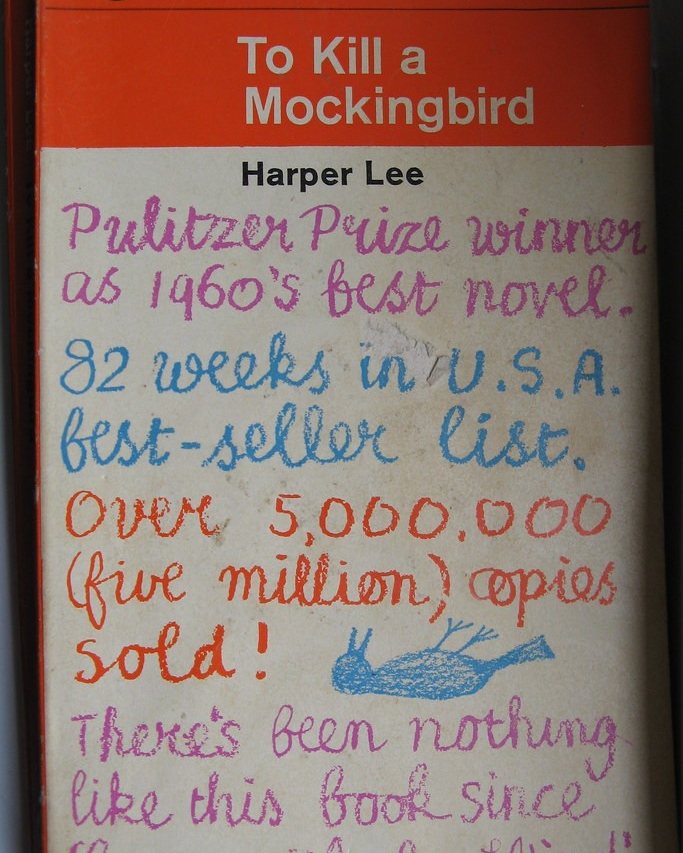
Author: Harper Lee · Published: 1960 · Genre: Classic fiction, Coming-of-age
To Kill a Mockingbird is a childhood story that turns into a courtroom drama about racism in the American South. It is funny, humane and beautifully paced, and it still teaches empathy better than most novels. But it is told entirely through white eyes, and the Black characters it defends barely get to speak. Read it, and read it critically.
What it’s about
The story is set in Maycomb, a small, sleepy Alabama town, during the Depression. The narrator is Jean Louise “Scout” Finch, looking back on the years when she was roughly six to nine. She lives with her older brother Jem, their widowed father Atticus, a lawyer, and Calpurnia, the family’s Black cook, who helps raise the children.
The first half is about childhood. Scout, Jem and their summer friend Dill spend their days obsessed with Boo Radley, a neighbor nobody has seen in years. The second half turns serious when Atticus is appointed to defend Tom Robinson, a Black man accused of raping Mayella Ewell, a young white woman from the town’s poorest family. The town turns on the Finches, and Scout begins to see the adults around her clearly. The novel won the Pulitzer Prize for Fiction, and the 1962 film starring Gregory Peck as Atticus fixed its images in popular memory.
What works
- Scout’s voice. She is stubborn, quick with her fists and very funny. Lee lets the grown-up narrator explain what the child didn’t understand, so we get innocence and hindsight at the same time.
- The trial. The courtroom chapters are tense and clear. Atticus builds his defense on plain physical evidence, and Lee lets the facts do the work rather than stacking up speeches. Having the children watch from the segregated balcony, seated with the Black townspeople, is one of the book’s quietly powerful choices.
- Small-town texture. Miss Maudie’s garden, Mrs. Dubose’s fight to break her morphine addiction, Aunt Alexandra’s missionary tea: Maycomb feels real, with its kindness and its hypocrisy side by side.
- The central image. Atticus tells the children it’s a sin to kill a mockingbird, a bird that harms no one. The idea runs through the whole book without being hammered home.
The controversy
The novel has been challenged and pulled from classrooms for decades, mostly over its racial slurs and its rape trial. In 2017 the school district in Biloxi, Mississippi, dropped it from an eighth-grade reading list after complaints that its language made people uncomfortable.
The more serious criticism is literary. Tom Robinson and Calpurnia are drawn with sympathy but little depth, and the moral hero is a white lawyer. Many readers and critics describe it as a white savior story that puts white conscience ahead of Black experience. Defenders answer that Lee wrote exactly what a white child in that town could see, and that the book’s limits are honest ones. Both points are fair.
There is also a simpler craft complaint. The first half is episodic, and readers expecting a legal drama may find the long stretches of games, school and neighborhood gossip slow before the trial begins.
Then there is Go Set a Watchman, published in 2015 but written earlier, which shows an older Atticus holding segregationist views. It complicates the saintly image many readers carry from this book, and it’s worth knowing about before you treat Atticus as a flawless model.
Who should read it
Teenagers meeting it for the first time, and adults who haven’t reread it since school. For the other half of the picture, pair it with Mildred D. Taylor’s Roll of Thunder, Hear My Cry, which tells a story of the same era from inside a Black family.
Rating: 4/5
Photo credits — Featured image: Photo by crowbot via Flickr, CC BY-SA 2.0, cropped.
