

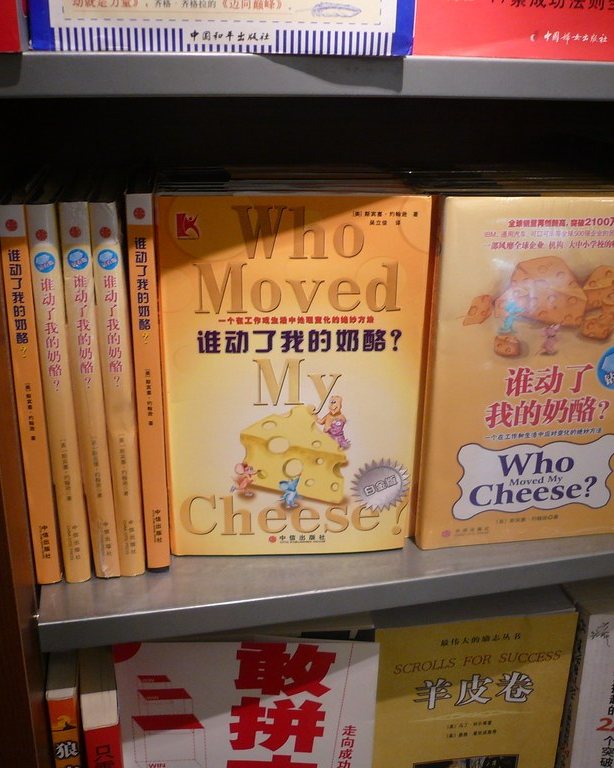
Author: Spencer Johnson · Published: 1998 · Genre: Self-Help, Business
Who Moved My Cheese? is a very short parable with one message: change is inevitable, so notice it early, adapt quickly and stop clinging to what used to work. That message is sound, and you can read the whole book in under an hour. But it’s so simplified that it verges on patronizing, and its use by companies to soften layoffs turned it into a symbol of corporate spin. Read it to understand a cultural phenomenon, not for fresh insight.
What it’s about
Four characters live in a maze and search for cheese, a stand-in for whatever you want in life, from a good job to a relationship to health. Two are mice, Sniff and Scurry, who react to change by instinct. Two are “Littlepeople,” Hem and Haw, who think and feel like humans, with all the complications that brings.
All four find a large supply of cheese at Cheese Station C and settle in. One day it’s gone. The mice, who had noticed it shrinking, simply head off to look for more. Hem is outraged and refuses to leave, insisting things should go back to how they were. Haw hesitates, then eventually ventures back into the maze, writing lessons on the walls as he goes, such as asking himself what he would do if he weren’t afraid.
Johnson, a physician who had earlier co-written The One Minute Manager with Kenneth Blanchard, keeps the prose deliberately simple, almost like a children’s story.
The parable is framed by a reunion of old classmates in Chicago, one of whom tells the story. Afterward, the group discusses how it applies to their jobs, marriages and lives.
What works
- It’s memorable. The characters give people a shared language. Calling someone “a Hem” is quick shorthand for refusing to adapt.
- Fear is the real obstacle. The strongest idea is Haw’s realization that what he imagined was worse than what he actually faced once he started moving. Readers dealing with job loss or big life changes often find that reassuring.
- Short and discussable. You can finish it on a commute and talk it through with a team or family.
The controversy
The book became a staple of corporate life, and many employers handed it out to staff during restructurings and downsizing. That context shaped its reputation. Critics argued that it encourages workers to accept management decisions without question: the cheese moves, and the only acceptable response is to scurry after new cheese. Nobody asks who moved it, or whether moving it was fair.
That criticism prompted rebuttals, including parodies and Deepak Malhotra’s I Moved Your Cheese, a counter-parable in which mice question the maze itself rather than simply running through it.
Defenders say the book is about personal response, not workplace policy, and that when change truly is beyond your control, adapting quickly is good advice. That’s fair. The problem is that the book presents all change as natural and unquestionable, which it rarely is. Sometimes the right response to a moved cheese is to push back, organize or ask for reasons. The story also has little to say about helping one another: Haw tries to persuade Hem to come along, then goes on alone.
It’s also condescending in tone. The discussion section spells out the moral again and again, as if readers might have missed it, and the characters are too thin to carry any nuance: the mice are right, Hem is wrong, and Haw learns.
Who should read it
Read it if you’re stuck resisting a change you genuinely can’t control and want a quick nudge to move on. If you want a richer look at change, choose a book that also asks when to challenge it.
Rating: 2.5/5
Photo credits — Featured image: Photo by Cory Doctorow via Flickr, CC BY-SA 2.0, cropped.
