

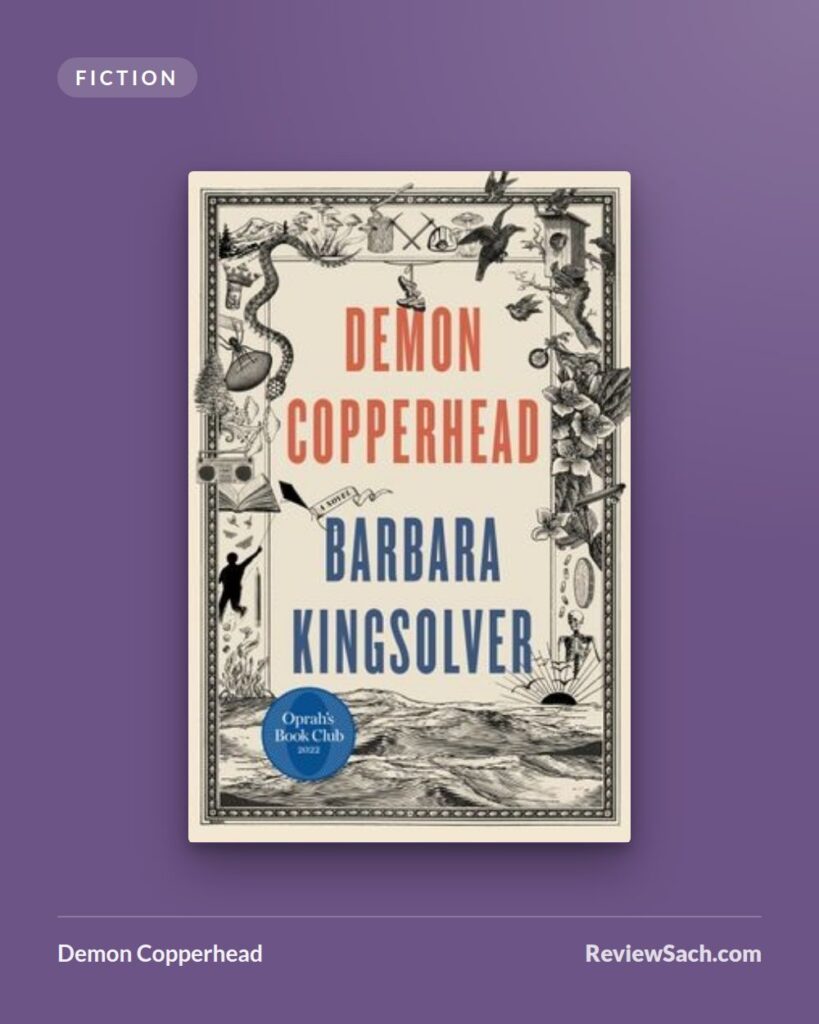
Author: Barbara Kingsolver · Published: 2022 · Genre: Literary Fiction
Demon Copperhead moves David Copperfield to the mountains of southwest Virginia during the opioid crisis, and the transplant works far better than it has any right to. It’s funny, angry and deeply humane, with a narrator you won’t forget. It’s also long and occasionally preachy, but it’s the rare prize-winner that reads like a page-turner.
What it’s about
Damon Fields is born in a trailer in Lee County, Virginia, to a teenage single mother; his father is already dead. Everyone calls him Demon Copperhead, largely thanks to his red hair. His mother’s addiction, a brutal stepfather known as Stoner, and a string of foster placements, including a tobacco farm that treats foster boys as cheap labor, push him through the kind of childhood Dickens gave David. Later, high-school football offers a way up, and prescription painkillers enter his life just as they are flooding the region.
Readers who know Dickens will enjoy spotting counterparts: Stoner for Murdstone, Coach Winfield and his daughter Angus for the Wickfields, the scheming U-Haul for Uriah Heep, the charismatic Fast Forward for Steerforth. Demon’s best friend, Maggot, and the Peggot family who live nearby echo the Peggottys. You don’t need to have read the original to follow any of it. Kingsolver lives in southwest Virginia herself, and the book reads partly as an answer to outsiders’ caricatures of the region.
What works
- Demon’s voice. He narrates as a young adult looking back, and his jokes are sharp enough to carry you through terrible events. The humor isn’t relief from the anger; it’s how he survives.
- The systems. Kingsolver shows how an overwhelmed foster care system, aggressive painkiller marketing and underfunded schools grind children down. The detail is specific and damning, and most of the time it comes through story rather than lecture.
- Place. The novel pushes back hard on the “hillbilly” stereotype. Demon is proud of where he’s from, and the book gives Appalachia intelligence, culture and a justified grievance against outsiders who mock or exploit it.
- Loyalty. Demon’s friendships, with Maggot, with the Peggots and later with Tommy, a foster kid raising his younger siblings, give the book its warmth. The children look after each other when the adults don’t.
- The Dickens engine. Borrowing Dickens’ structure gives the book momentum: a huge cast, sudden reversals of fortune and a hero whose decency keeps getting tested.
What doesn’t
At well over 500 pages it runs long, and the middle, especially the addiction chapters, can feel repetitive. At times Demon becomes a mouthpiece: his speeches about drug companies and outsider condescension are justified, but they sound more like Kingsolver than like a young man from Lee County.
The female characters are also less vivid than the men, which is partly inherited from Dickens. Angus and Demon’s girlfriend Dori matter to the plot but rarely get the depth the boys do. The coincidences are Dickensian too, with characters reappearing exactly when the plot needs them.
Critics have disagreed about its portrayal of the region, too. Most praised it as a corrective to stereotypes, but Boston Globe critic Lorraine Berry argued that it turns poverty into spectacle and paints Appalachians as morally deficient rather than failed by the systems around them. That’s a minority view, but a serious one.
Who should read it
Readers who love big, character-driven novels, fans of Dickens, and anyone who wants to understand the human side of the opioid epidemic. It shared the 2023 Pulitzer Prize for Fiction with Hernan Diaz’s Trust and won the 2023 Women’s Prize for Fiction, making Kingsolver its first two-time winner. It’s also a fine way into Dickens for anyone who never finished David Copperfield.
Rating: 4.5/5
Image credits — Cover image via Open Library. Cover design © the publisher, shown for review purposes.
