

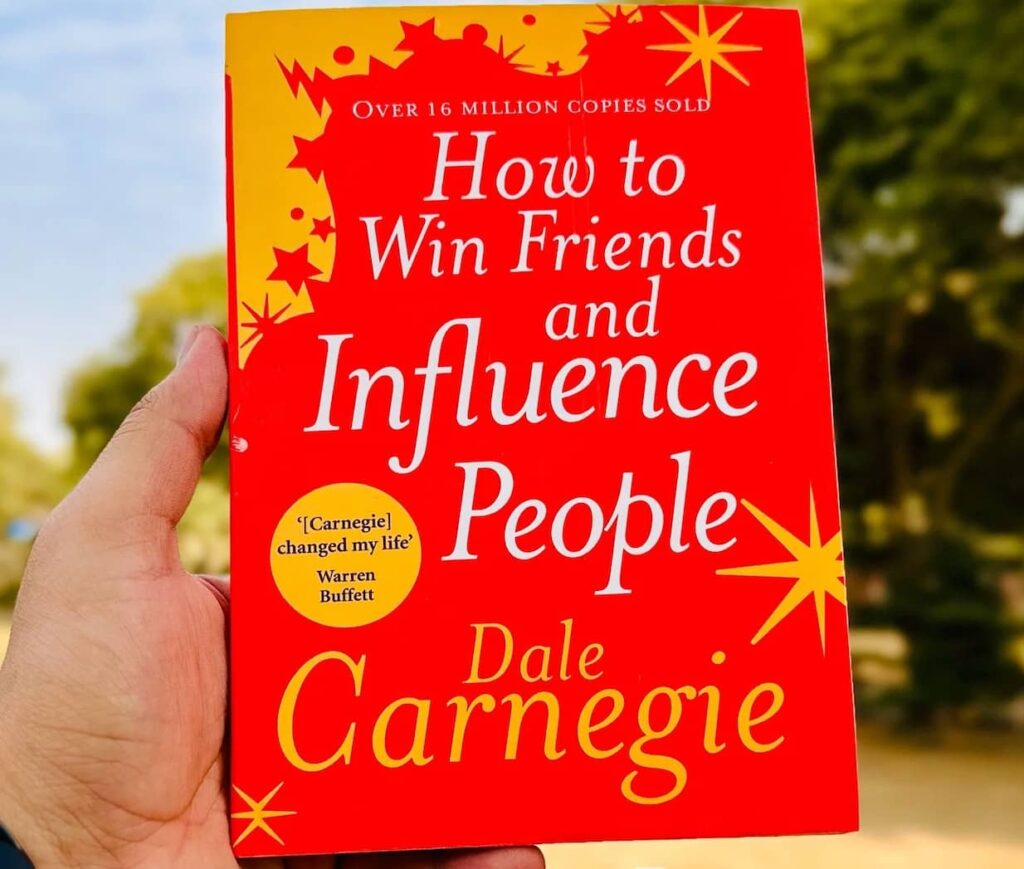
Author: Dale Carnegie · Published: 1936 · Genre: Self-Help, Communication
Few self-help books have lasted as long as How to Win Friends and Influence People. Dale Carnegie published it in 1936, based on the adult courses he taught in public speaking and human relations. It has since sold tens of millions of copies around the world. Nearly a century later, its main idea still holds up. Most of our success depends on how we deal with people, and dealing with people is a skill you can learn.
What the book covers
Modern editions are organized into four parts, each built around short, memorable principles and plenty of stories.
1. Fundamental techniques in handling people. Don’t criticize, condemn or complain. Give honest, sincere appreciation. Arouse in the other person an eager want. Carnegie’s argument against criticism is striking. Even notorious criminals, he notes, rarely blamed themselves. If gangsters could justify their actions, ordinary people certainly will, so criticism mostly makes people defensive. He tells the story of Abraham Lincoln writing a harsh letter to General Meade after Gettysburg and then never sending it.
2. Six ways to make people like you. Become genuinely interested in other people. Smile. Remember names, because a person’s name is to them “the sweetest and most important sound in any language.” Be a good listener. Talk in terms of the other person’s interests. Make the other person feel important, and do it sincerely.
3. How to win people to your way of thinking. This is the most practical section. The only way to win an argument is to avoid it. Show respect for other people’s opinions and never tell them flatly that they’re wrong. If you’re wrong, admit it quickly. Begin in a friendly way, get the other person saying “yes,” let them do most of the talking, and let them feel the idea is their own.
4. Be a leader. Begin with praise, point out mistakes indirectly, talk about your own mistakes first, ask questions instead of giving orders, let people save face and praise every improvement.
Why it still works
The principles sound obvious when you read them. They’re much harder when you’re angry, tired or sure you’re right. The book’s strength is that it keeps pulling you back to the other person’s point of view. Carnegie repeats one idea again and again: people care about themselves far more than they care about you. If you want cooperation, start from what matters to them.
The advice is also surprisingly modern. Listening more than you talk, showing real appreciation and helping people save face are the same ideas you’ll find in today’s books on leadership, negotiation and emotional intelligence, usually with less charm.
Criticisms
Read cynically, some techniques can look like manipulation, such as getting someone to say “yes” or making them think your idea was theirs. Carnegie anticipates this. He draws a sharp line between flattery, which is insincere, and appreciation, which is real, and he insists the methods only work if they come from the heart. The examples are also dated, full of 1930s salesmen and industrialists, and the language reflects its era. Some chapters repeat the same point with one story too many.
Who should read it
Anyone who works with people, which means almost everyone: new managers, salespeople, students, or anyone who has ever won an argument and lost a friend. It’s best read slowly, one principle at a time, and practiced rather than just finished.
Verdict
How to Win Friends and Influence People is a classic for a reason. It won’t turn you into a different person, but it will make you a better listener and a kinder critic.
Rating: 4.5/5
