

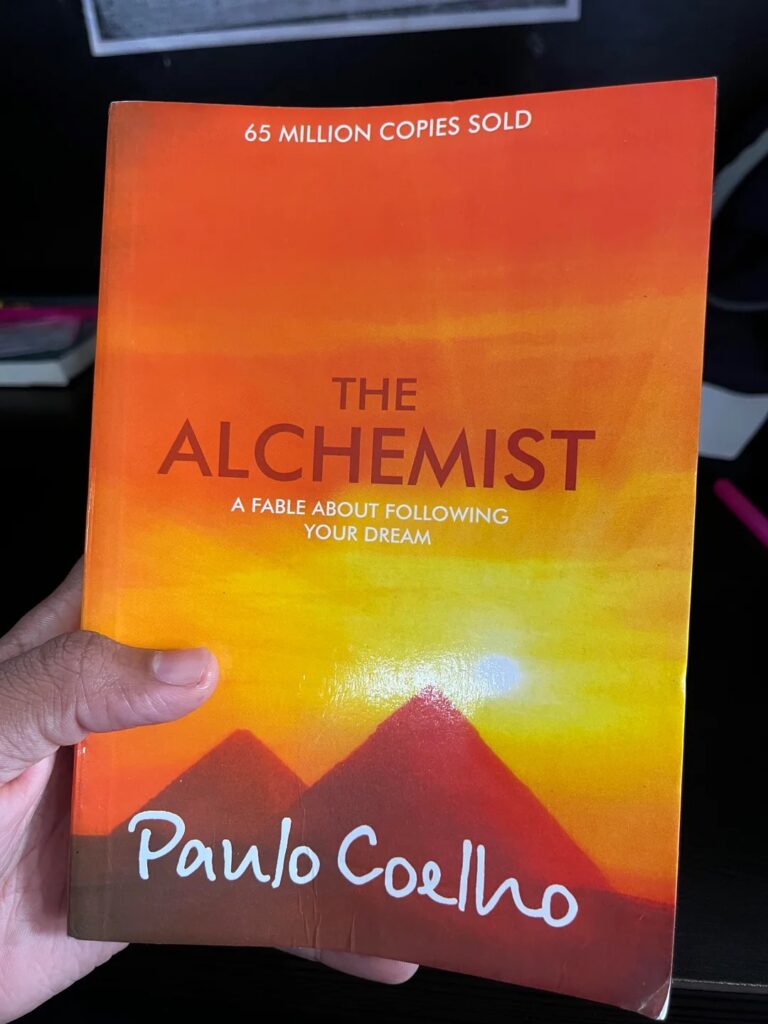
Author: Paulo Coelho · Published: 1988 (English translation 1993) · Genre: Fiction, Fable
Some books you read. Others you carry with you. The Alchemist, which Paulo Coelho first published in Portuguese in 1988, has become one of the most widely translated books ever written, and it belongs firmly in the second group. It’s short enough to finish in an afternoon, but its central question stays with you much longer: are you living the life you were meant to live, or just the one that feels safe?
The story
Santiago is a young shepherd in Andalusia, Spain. He loves his sheep, his books and the freedom of the open road. Then he has the same dream twice, about a treasure waiting for him at the pyramids of Egypt. A mysterious old king named Melchizedek tells him that every person has a “Personal Legend,” the thing they have always wanted to do. He also tells him that “when you want something, all the universe conspires in helping you to achieve it.”
So Santiago sells his flock and sets out. Almost immediately he’s robbed in Tangier and left with nothing. He takes a job with a crystal merchant, joins a caravan across the Sahara with an Englishman who is searching for an alchemist, and falls in love with Fatima, a young woman at a desert oasis. Eventually he meets the alchemist himself, who teaches him to listen to his heart and read the “omens” of the world. The ending brings the journey full circle in a way that is both surprising and quietly perfect.
Why it’s so moving
The Alchemist is really a book about people who want to experience life rather than just get through it. Every character represents a different choice.
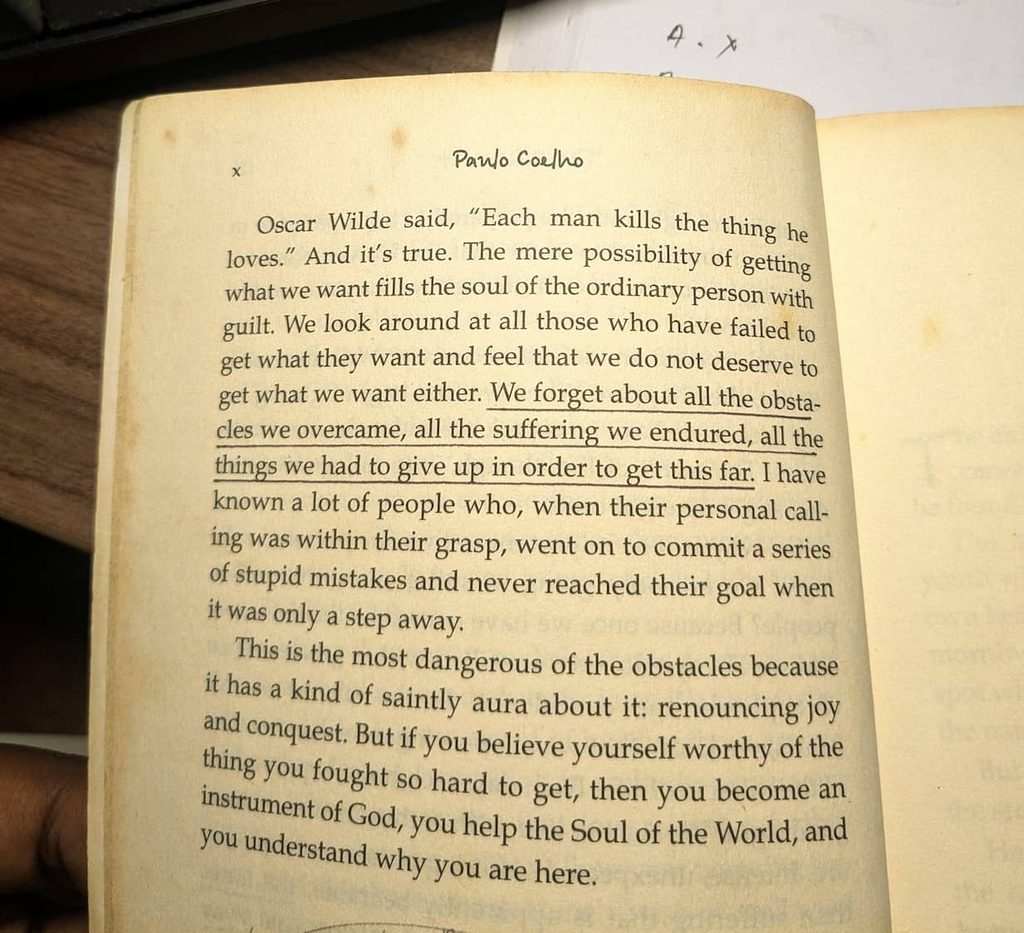
The crystal merchant is the most heartbreaking. He has dreamed his whole life of making the pilgrimage to Mecca, but he never goes, because he’s afraid that once the dream comes true he’ll have nothing left to live for. Many readers see themselves in him, and that’s what makes the book sting.
Santiago chooses the opposite. He leaves comfort behind, loses everything more than once and keeps going. The treasure matters less than who he becomes along the way: braver, wiser and more alive.
Fatima gives the book one of its most beautiful ideas: love doesn’t hold you back from your journey. She tells Santiago to go, trusting that what is truly meant for them will last.
Coelho’s language is simple, almost like a parable, and full of lines people underline: the idea that fear of suffering is worse than suffering itself, or that it’s the possibility of a dream coming true that makes life interesting. Maktub, “it is written,” echoes through the book, balanced against the idea that you still have to walk the road yourself.
What some readers dislike
The simplicity that makes The Alchemist beautiful can also make it feel thin. Some readers find it preachy, and the idea that the universe helps you get what you want can sound like wishful thinking if you take it literally. The characters are symbols more than real people. If you want complex psychology or realistic plotting, this isn’t that book.
Who should read it
Read it if you’re standing at a crossroads: a new job, a move, a risky dream you keep putting off. Read it if you love to travel, or simply love being alive. It also rewards rereading. The same book feels different at 18, 30 and 50.
Verdict
The Alchemist is a gentle, luminous fable that reminds you the journey is the point. It won’t give you a map, but it might give you the courage to leave the pasture.
Rating: 4.5/5
