

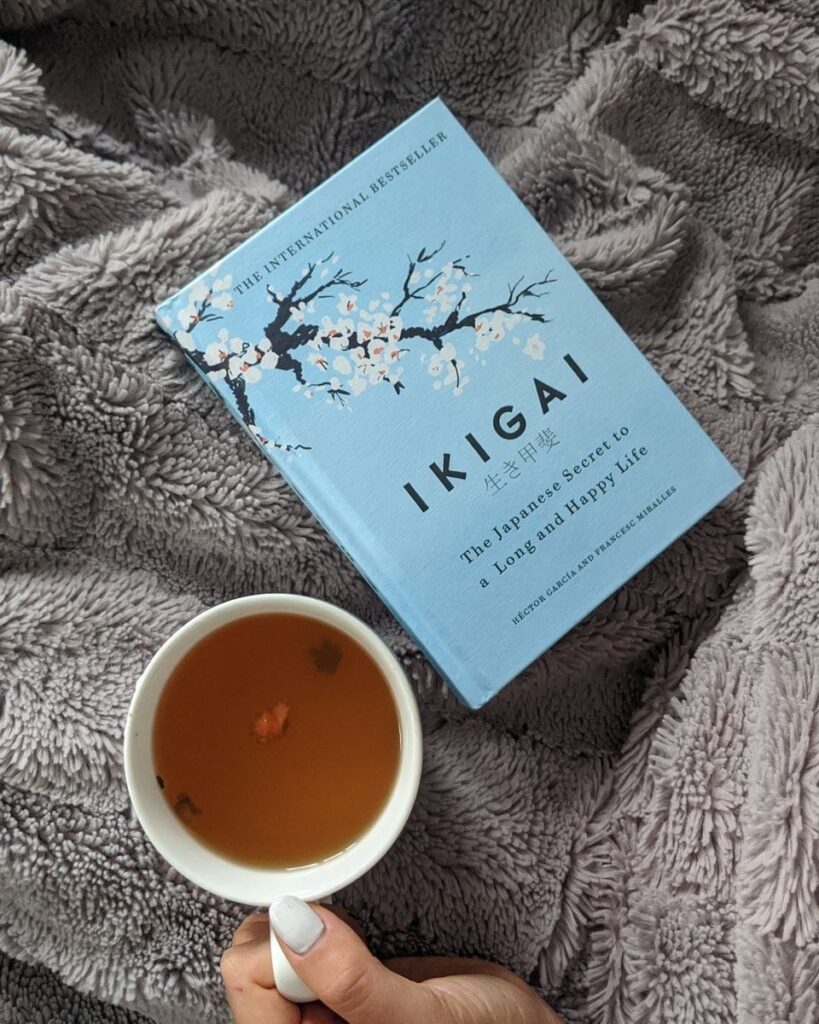
Author: Héctor García and Francesc Miralles · Published: 2016 · Genre: Self-Help, Wellness · Original title: Ikigai: los secretos de Japón para una vida larga y feliz
Ikigai argues that having a reason to get up in the morning, combined with community, gentle activity and moderate eating, is central to a long and happy life. It’s a calm, pleasant read that takes an afternoon, and much of its advice is sensible. But it’s closer to a scrapbook than a serious study, and it presents Okinawa’s famous longevity with more confidence than the evidence allows. Good for a gentle nudge, not for depth.
What it’s about
García, a Spanish writer who has long lived in Japan, and Miralles, a Spanish novelist, build the book around ikigai, a Japanese word they gloss roughly as the happiness of always being busy. Their centerpiece is a visit to Ogimi, a village in the north of Okinawa’s main island that promotes itself as a village of longevity, where they interviewed elderly residents.
Around that trip they tour a wide range of ideas:
- Flow, Mihaly Csikszentmihalyi’s idea of total absorption in a task, offered as a way to find ikigai in daily work.
- Logotherapy and Morita therapy, Viktor Frankl’s meaning-centered approach and a Japanese therapy built on accepting feelings and acting anyway.
- Hara hachi bu, the Okinawan habit of stopping eating when you’re about 80 percent full, and moai, informal groups whose members support each other.
- Gentle movement, with illustrated routines from radio taiso, yoga, tai chi and qigong.
The book closes with ten rules for living with ikigai. Oddly for a book promising Japanese wisdom, much of the psychology it leans on, including flow and logotherapy, comes from Western thinkers.
What works
- The interviews are charming. Ogimi’s elders talk about friendship, gardening, singing and staying busy. Their emphasis on community rather than achievement is the most persuasive part of the book.
- It’s a decent sampler. If you’ve never heard of flow or Morita therapy, this is an easy way in.
- The advice is low-risk. Eat a little less, move every day, keep friends close, have something to do. It’s hard to argue with, and none of it requires buying anything or overhauling your life overnight.
- It stays modest about the word. In Japan, ikigai usually means something ordinary, such as a hobby, grandchildren or a job, rather than a single grand life purpose. The book’s everyday framing is closer to that than many Western versions.
The controversy
The subtitle promises a Japanese “secret,” and that framing is the problem. The book treats Okinawa as proof that its recipe works, but the case rests on anecdotes and a short visit, not on data.
Okinawa’s reputation is itself contested. Researchers such as Saul Justin Newman argue that extreme-age records in so-called blue zones, Okinawa included, are unreliable, pointing to weak documentation and to Japan’s discovery in 2010 that many people listed as centenarians nationwide were missing or long dead. Blue Zones researchers and some demographers dispute this and defend the Okinawan data. Either way, Okinawa’s once-clear life expectancy lead within Japan has faded, which complicates any tidy story linking its traditions to long life. Changing diets and lifestyles among younger Okinawans are often cited as one reason, but the book barely engages with any of this.
The writing is also thin in places. Points repeat, inspirational quotes fill space, and the exercise diagrams feel like padding in a book this short.
Who should read it
Read it if you want a short, soothing book about slowing down and staying connected as you age. If you want real evidence about longevity, or a deeper treatment of Japanese culture, look elsewhere. Treat it as a pleasant prompt to reflect, not as a scientific guide to living longer.
Rating: 3/5
Photo credits — Featured image: Photo by Paula Alionyte on Pexels. In-article photo: Photo by Akshata Bablad on Pexels.
